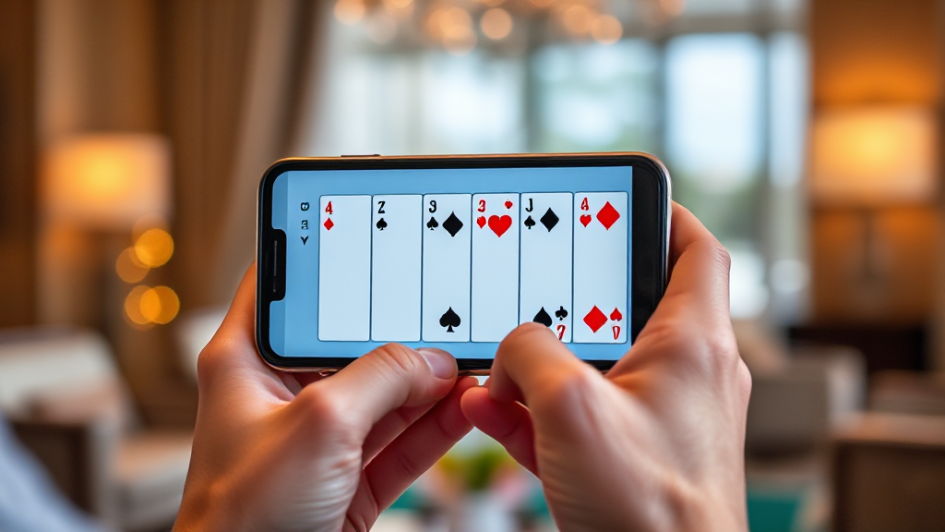
How to Play Rummy for the First Time on a Phone Without Losing Track of the Rules
By the end of this piece you’ll know exactly what happens in your first rummy hand, why you lost track of the melds halfway through, and what to do differently in hand two. That’s the whole point. A first game of rummy on a phone is not hard, but it is unfamiliar, and unfamiliarity is what makes beginners feel like the rules are moving under their feet. The good news is that the confusion is almost always the same three or four things, and once you name them, they stop being confusing. If you want a directory that lays out app options side by side before you commit to one, First Time Play Rummy Game is a reasonable starting point, but the actual learning happens at the table, and that’s what this covers.
What actually happens in your first hand
A rummy hand starts with a deal. In the standard 13-card format, you receive thirteen cards and the rest form a closed stockpile, with one card turned face up to begin the discard pile. Your job is to arrange those thirteen cards into valid groups and sequences, then shed the one card you don’t need. That’s it. Everything else is detail layered on top.
The detail that trips up almost every first-timer is the difference between a set and a sequence. A set is three or four cards of the same rank in different suits — three sevens, for example. A sequence is three or more consecutive cards of the same suit. Both count as melds, and you need a minimum number of them before you can declare. In the common 13-card variant, that minimum is two sequences, at least one of which must be a pure sequence with no joker substituted in. This single rule is where most beginners lose their first game, because they build two lovely sets and then discover sets don’t satisfy the sequence requirement at all.
The second thing that happens is the joker. A joker in rummy is not a wild card you hoard; it’s a substitute for a card you’re missing. A printed joker, or a card randomly designated as a joker at the start, can stand in for any card in a meld. Beginners often treat jokers as precious and refuse to use them, which is backwards. A joker sitting in your hand is a dead card. A joker placed in a meld is progress.
Then comes the turn loop, and it is genuinely simple: draw one card, then discard one card. You can draw from the closed stockpile or pick up the top card of the discard pile, though picking from the discard pile usually comes with a condition — you must use that card in a meld immediately. If you can’t, you shouldn’t pick it up. The loop repeats until someone declares or the stockpile runs out.
The mistakes that make a first game feel harder than it is
I’ve watched a lot of people play their first hand, and the errors cluster tightly. Here’s what actually goes wrong, in rough order of frequency.
Sorting by suit only. New players arrange their hand by suit and then stare at it. That’s fine for finding sequences but terrible for finding sets, because sets span suits. A better habit is to sort by rank within suit groups, or to physically separate potential sequences from potential sets as you build them. On a phone this matters more than at a physical table, because you can’t spread thirteen cards out in front of you. Most apps let you drag cards into a working order, and you should use that feature aggressively rather than leaving the hand in dealt order.
Discarding the card you just drew. This is the classic beginner move. You draw, you don’t immediately see a use for the card, you throw it away. But the card you drew was random, and the card you discard should be the least useful card in your entire hand, not the newest one. Before discarding, scan your whole hand for the card that contributes least to any potential meld. That’s your discard.
Ignoring what’s been discarded. The discard pile is information. If two sevens have already been thrown away, the odds of completing a set of sevens are much worse than they look. Beginners play as if the discard pile doesn’t exist and then wonder why they keep waiting on cards that will never arrive. Watching discards is the single cheapest skill upgrade available to a new player.
Declaring too early or too late. Declaring is the moment you place your melds and show your hand. Do it before your melds are valid and you’ve made an invalid declaration, which usually carries a penalty. Wait too long and someone else declares first. The judgment call is whether your remaining unmelded cards are few enough and your melds solid enough to risk it. As a beginner, the safer instinct is to get to a clean, valid hand and declare rather than chasing a perfect one.
Misreading the drop rules. Most variants let you drop out of a hand early, sometimes at a lower cost than dropping late or being caught with a bad hand. New players often don’t realise dropping is an option at all, so they sit through hands they have no chance of winning. Knowing when to drop is not defeat; it’s part of the game.
How to practise without burning a real bankroll
The fastest way to get comfortable is to play practice or free tables first. Most rummy apps include a practice mode where the cards behave identically but nothing is at stake. Use it for at least ten hands before you play anything with a real entry cost. Ten hands is roughly the point where the turn loop becomes automatic and you stop having to think about whether you draw or discard first.
When you do move to paid tables, start at the lowest stakes available and treat the first several games as tuition rather than as a way to win. This is not a moral lecture; it’s practical. The players at low-stakes tables are also learning, which means the games are slower and more forgiving, and you’ll have time to actually think through your melds instead of panicking on a timer.
Set a budget before you open the app, not after. Decide what you’re willing to spend on the session, and when it’s gone, close the app. This sounds obvious, but the reason it matters for a first-timer specifically is that unfamiliar games produce more impulsive decisions, and impulsive decisions are expensive. A timer or a simple note on your phone works fine as a budget reminder.
It also helps to pick one app and stick with it for a while. Every rummy app has slightly different table layouts, different timers, and different ways of showing valid melds. Switching apps every session means re-learning the interface every session, which is wasted effort when you’re still learning the game itself. Compare a few options, pick one, and give it a proper run.
Reading an app’s rules before you trust its table
Rummy is not one game. It’s a family of games, and the rules that apply in one variant may not apply in another. Points rummy, pool rummy, and deals rummy all handle scoring, dropping, and the number of cards differently. Before you sit down at any table, read that app’s specific rules page. It takes five minutes and saves you from playing by the wrong rulebook.
The things worth checking are consistent across variants. How many cards do you start with? How many sequences are required to declare, and how many of those must be pure? What is the penalty for an invalid declaration? What does it cost to drop, and is there a difference between an early drop and a late one? How is the joker designated, and can a joker be used in a pure sequence? Is there a maximum number of jokers allowed in a single meld? Get answers to those seven questions and you understand the variant well enough to play it.
It’s also worth checking how the app handles the practical side of things before you invest time. Look at how bonuses are described, what the withdrawal terms actually say, and whether the app is available for your device. A directory-style comparison site is useful here because it puts those details next to each other rather than making you hunt through each app individually. That’s the sensible order of operations: compare, choose, read the rules, then play.
One more thing worth knowing before your first paid hand: the difference between a printed joker and a wild joker. A printed joker is a card that ships as a joker in the deck. A wild joker is a card of a specific rank that the app designates as wild for that hand, and it changes from hand to hand. If you don’t know which rank is wild in the current hand, you’ll misjudge your melds. Most apps display this clearly, but beginners often don’t look.
What to expect from hand one versus hand fifty
Your first hand will feel slow and slightly chaotic. You’ll probably misjudge at least one meld, you may declare invalidly, and you’ll almost certainly discard a card you should have kept. None of that is a problem. It’s the normal shape of learning a card game.
By around hand ten, the loop is automatic. You draw without thinking about it, you scan your hand for the weakest card, you discard. The mental effort shifts from “what are the rules” to “what is my best play,” which is where the game actually becomes interesting.
By hand fifty, you’ll notice you’re reading the discard pile without being told to, you’re tracking which ranks are dead, and you’re making drop decisions based on the shape of your hand rather than on hope. That’s the point where rummy stops being a set of instructions and starts being a game you’re playing. The gap between hand one and hand fifty is smaller than it looks from the outside — a few focused sessions, not months.
The honest summary for a first-timer is this: learn the difference between a set and a sequence, remember that at least one sequence must be pure, use your jokers instead of hoarding them, discard your weakest card rather than your newest one, and watch the discard pile. Do those five things and your first game will be recognisably rummy rather than guesswork. Everything else — the scoring nuances, the drop strategy, the table psychology — layers on top of that foundation once you’ve got it.
Play a few practice hands before you play for anything real, keep your first sessions at the lowest stakes, and set a spending limit before you open the app rather than after. Rummy rewards patience and pattern recognition, and both of those improve with repetition. Your first hand is not a test. It’s the first data point.
Leave a Reply